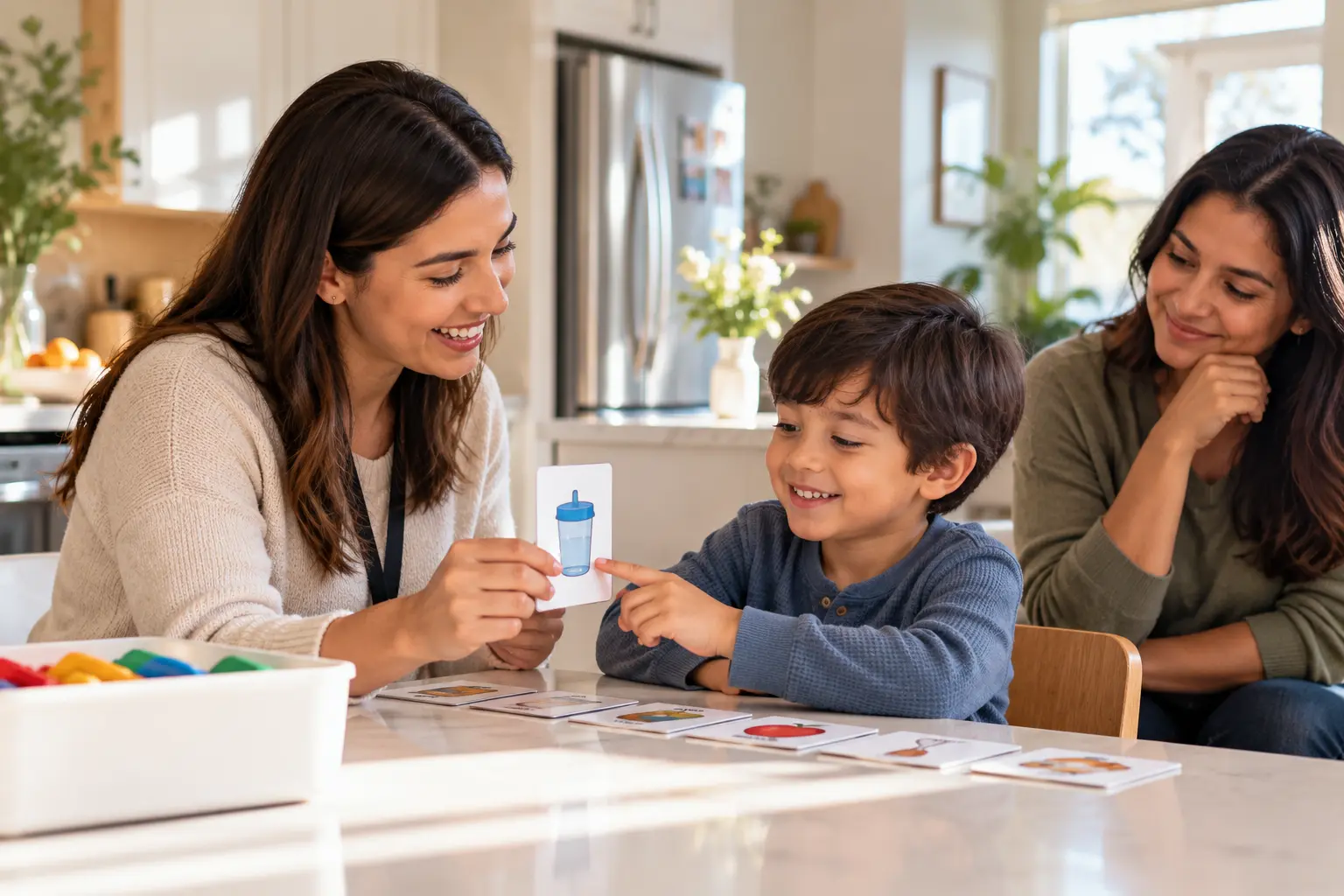
Learning that carries over
Many children find it hard to use a skill learned in one place somewhere else. Teaching at home removes that gap — the skill is learned where it’s used.
Real progress, right where your child lives.
Your child's kitchen, bedroom and backyard are where life actually happens — so that's where we bring the therapy. Our in-home ABA therapy in Toronto sends a trained therapist to your door to help your child build communication, play, daily-living and social skills inside the routines your family already has. Every program is designed and supervised by a Board Certified Behaviour Analyst (BCBA), shaped around your goals, and built so the progress keeps going long after each session ends.
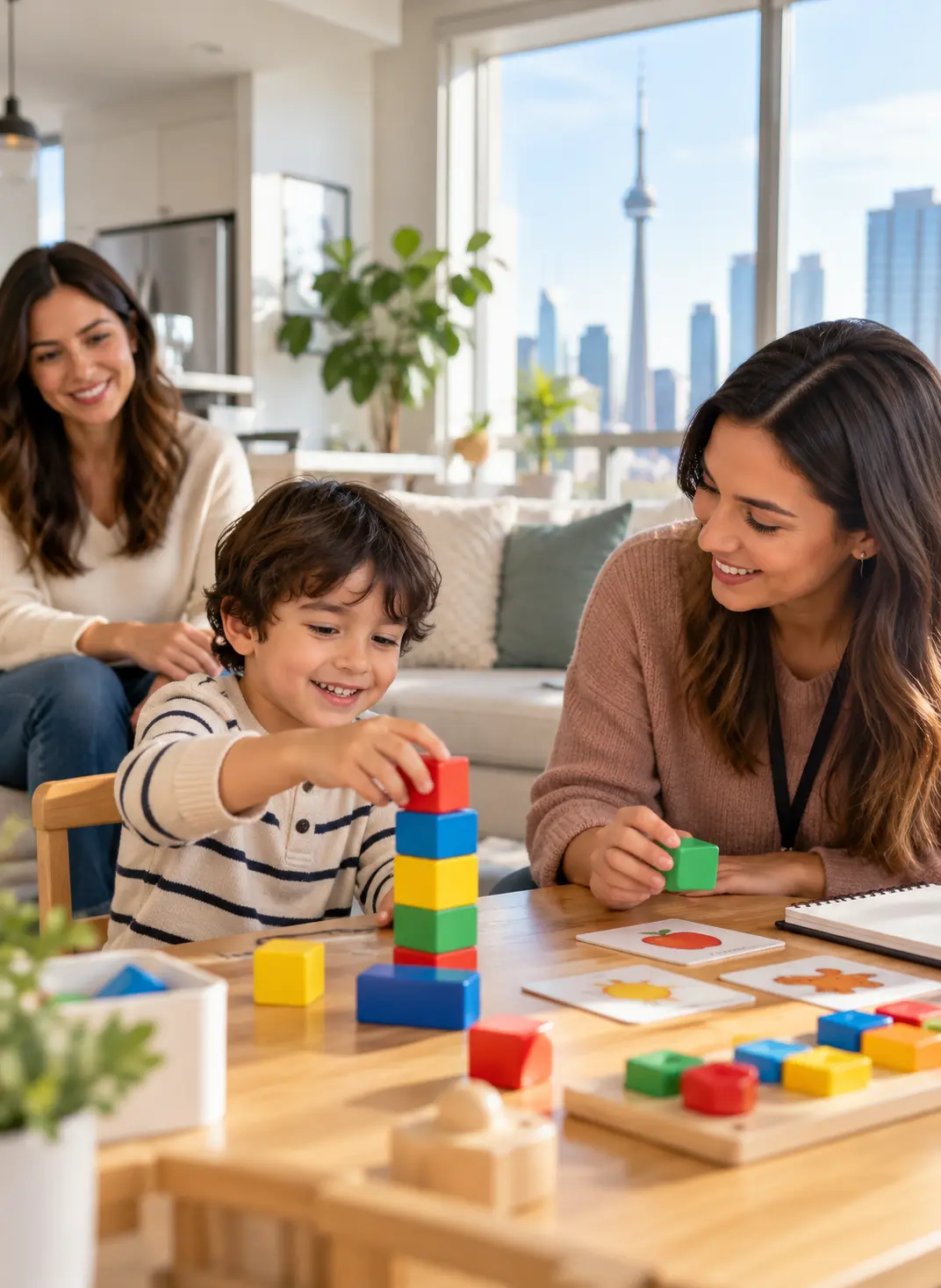
In-home ABA therapy (also called home-based ABA) is Applied Behaviour Analysis delivered in your child's natural environment instead of a clinic. A trained therapist works one-on-one with your child at home, while a BCBA designs the program, reviews the data and adjusts goals as your child grows.
The approach is the same evidence-based ABA used in clinics: skills are broken into small, teachable steps and strengthened with positive reinforcement. The difference is the setting. Instead of practising "asking for help" at a table, your child practises it while opening a snack. Instead of learning routines in theory, they learn to brush teeth at their own sink.
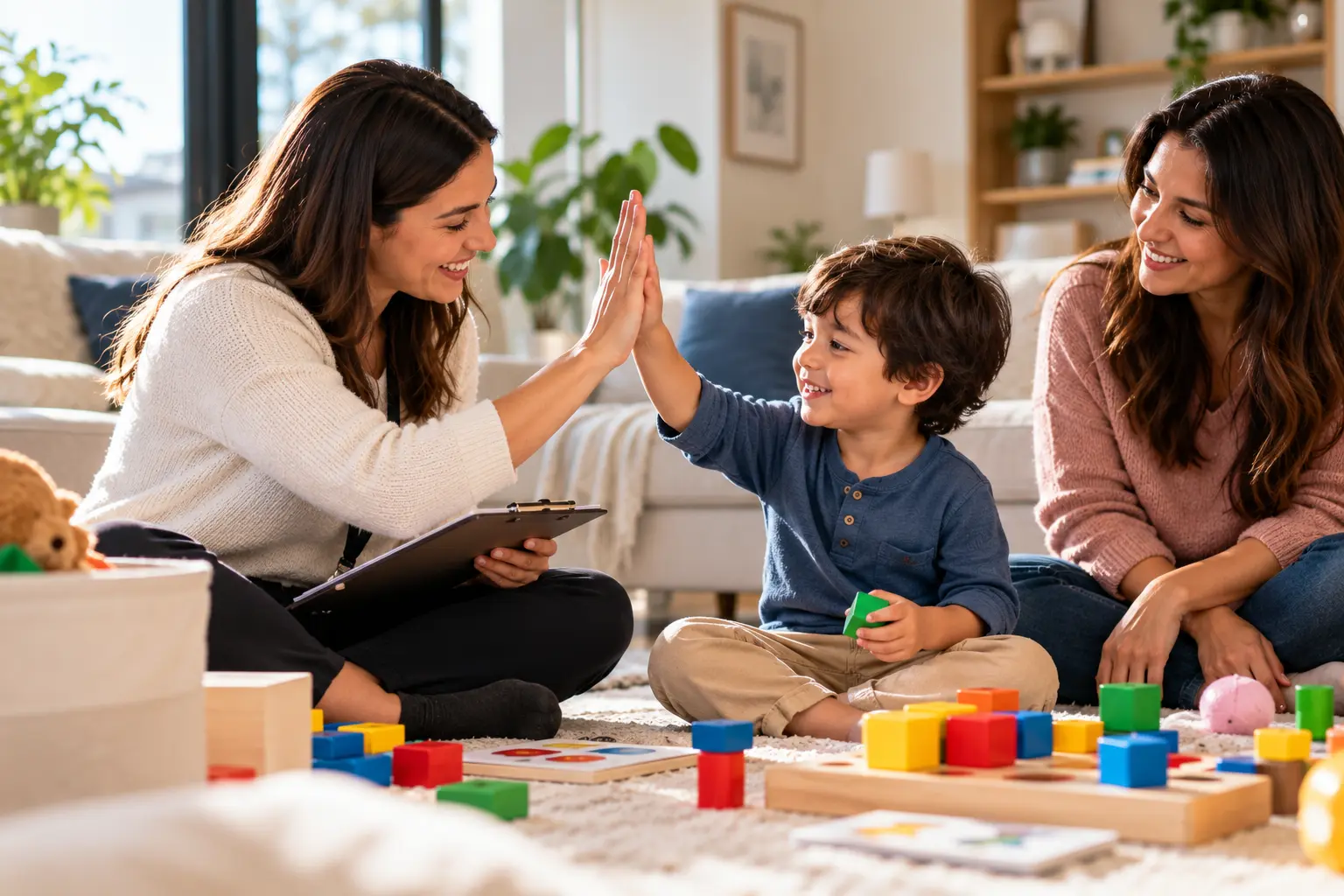
Skills learned at home tend to stick, because your child practises them in the exact places and moments they'll need them.
Many children find it hard to use a skill learned in one place somewhere else. Teaching at home removes that gap — the skill is learned where it’s used.
No commute on the 401, no waiting room, no new building to adjust to. Children who feel safe and settled are usually more ready to learn.
Mealtimes, getting dressed, bath time, sibling play and bedtime become learning opportunities. We target the moments that are hardest for your family.
You see exactly what works and why. Our ABA parent coaching is built into every in-home program, so you can use the same strategies between visits.
Brothers, sisters and grandparents can join in, which makes skills like sharing and turn-taking feel natural.
Sessions are planned around school, daycare and work — including times that suit busy GTA families.
Every goal is chosen with you, based on your child's individual assessment. Common areas include:
Requesting snacks or toys, saying "help" or "all done", using words, signs, pictures or a device.
Dressing, toileting, handwashing, brushing teeth, trying new foods at the table.
Sharing with siblings, taking turns, pretend play, joining a family game.
Moving from screen time to dinner, getting ready for school, settling at bedtime.
Waiting, coping with "no", calming strategies when overwhelmed.
Understanding why it happens and teaching a better way to communicate the same need.
Following instructions, sitting for short activities, imitation — skills that help at daycare and kindergarten.
For toddlers and preschoolers, these goals are often part of our early intervention ABA program. Starting support early can help children build useful skills during important developmental years.
From first call to first session, the process is simple and you're involved at every step.
A friendly, no-pressure call about your child, your concerns and what you're hoping for. Book your call.
A BCBA gets to know your child through play-based observation and conversations with you, ideally in your home. Learn about assessments.
You receive clear, jargon-free goals built around your daily routines, plus a recommended schedule.
A therapist visits on a consistent schedule and works with your child through play and everyday activities. The BCBA supervises regularly.
Progress is measured with data at every session. Goals are updated as your child masters skills, and you get regular check-ins.
A small space with few distractions, your child's favourite toys or snacks, and a parent or caregiver at home during sessions.
In-home ABA is a strong fit if your child:
It also suits families who want to be closely involved. If home isn't always ideal, many families mix settings — adding virtual ABA therapy or ABA support at daycare so skills carry across every environment.
Every in-home program is designed and overseen by a Board Certified Behaviour Analyst (BCBA). Since July 1, 2024, "Behaviour Analyst" has been a protected title in Ontario, reserved for professionals registered with the College of Psychologists and Behaviour Analysts of Ontario (CPBAO). Families can verify a clinician's registration on the CPBAO public register. Our therapists are trained in child-friendly, play-based ABA and receive regular BCBA supervision. Learn more about our team.
Often, yes. ABA is one of the core clinical services under the Ontario Autism Program (OAP), and families register through AccessOAP to receive Childhood Budget or core clinical services funding. We can help you understand how your funding may apply to in-home sessions.
Waitlists for OAP core services are long. Ontario added about $189 million to the program in its 2026 budget, but advocates still report multi-year waits. Many families choose to start privately funded in-home ABA while they wait, so their child doesn't lose valuable time. Talk to us about the options that fit your budget.
Ask About Funding OptionsWe bring ABA therapy to homes across the city and surrounding areas, including Toronto, North York, Scarborough, Etobicoke, Vaughan and Mississauga. Not sure if we cover your neighbourhood? Contact us — and if you're outside our in-person area, virtual ABA is available anywhere in Ontario.
There's no single number. Hours are recommended after the assessment, based on your child's needs, goals and age, and are reviewed as progress is made.
Yes, a parent or caregiver should be home. You don't need to join every minute, but taking part regularly helps skills carry over between visits.
We support young children through school age. Starting early — often between ages 2 and 6 — tends to bring the strongest gains, but children benefit at any age.
Not always. A diagnosis is needed to register with the OAP, but we can start with an assessment if you have early concerns. Reach out and we'll guide you.
Neither is better for every child. Home is ideal for daily routines and comfort; a clinic can help with peer interaction. Many families combine both.
Cost depends on the number of hours and the level of BCBA supervision. We'll give you a clear estimate after your consultation and help you explore OAP funding and private insurance.
For more answers, visit our FAQ page.
Your child deserves to learn in a place where they feel safe and understood. Tell us about them and what you're hoping for, and we'll help you take the first step.