
What Is ABA Therapy, Really?
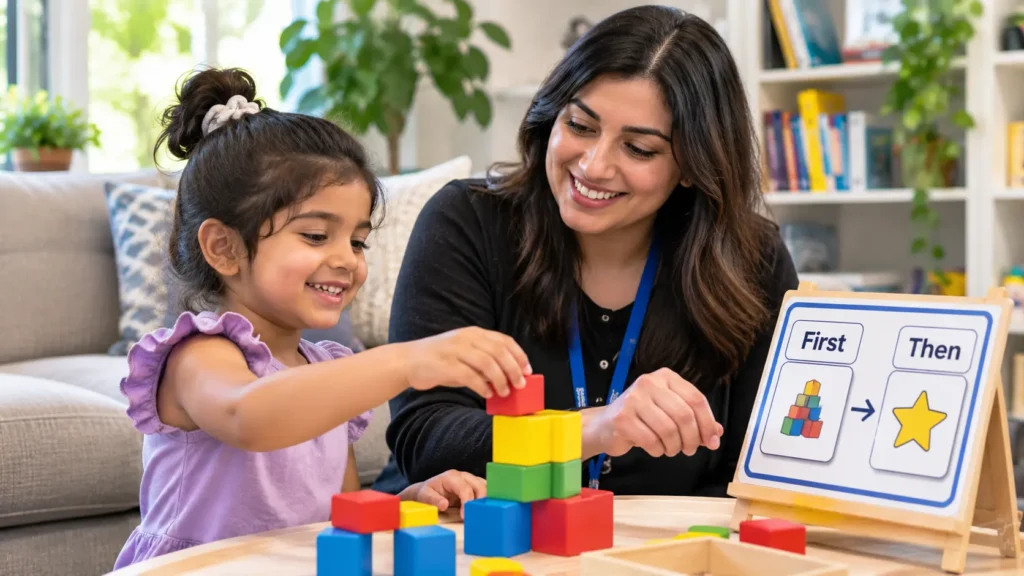
If you’ve just started looking into ABA therapy in Toronto, you’ve probably noticed the explanations online sound a bit clinical. Here’s the plain-language version: Applied Behaviour Analysis is a way of teaching skills — talking, playing, following along in a group — by breaking them into small pieces and rewarding progress as it happens. It’s not a one-size-fits-all curriculum. A Board Certified Behaviour Analyst (a BCBA) builds the plan around your specific kid, then a therapist runs the sessions and tracks what’s working.
That tracking part matters more than people expect. Good ABA isn’t “do the same activity every week” — it’s constant small adjustments based on how your child is actually responding. If something isn’t clicking after a few sessions, the plan changes.
A lot of in-home ABA programs in Toronto start with a free assessment, so you get a sense of what the plan would look like before signing anything.
How Do You Know If Your Child Needs It?
Most parents don’t arrive here because of one moment — it’s usually a pattern that builds up over weeks or months. Maybe your child isn’t using many words yet, or gets stuck mid-transition and melts down more than seems typical. Maybe eye contact feels hard to get, or playing alongside other kids never quite turns into playing with them.
A few things that commonly prompt parents to look into ABA:
- Speech that’s delayed or very limited for their age
- Repetitive behaviours, or interests that are intense and narrow
- Big reactions to sensory stuff — noise, textures, crowds
- Trouble following multi-step instructions
Starting young, often somewhere between ages two and six, tends to make the biggest difference. That said, plenty of older kids and teens still get real value out of ABA, usually around life skills or cutting down behaviours that are making school harder.
What About ABA Therapy at Daycare in Toronto?
This comes up constantly: can the therapist just come to daycare instead of adding another thing to the schedule? For a lot of Toronto families, ABA therapy at daycare in Toronto is actually the better fit, not just the more convenient one. The behaviours you’re trying to work on — sharing a toy, waiting for a turn, handling a loud room — tend to show up exactly where they’re hardest: in the group.
Having a therapist on-site means they can coach the daycare staff directly, so the strategies don’t disappear the moment the session ends. It also means one less pickup or drop-off for you, which matters more than it sounds like it should once you’re juggling it weekly.
The one catch: not every daycare allows outside providers to come in. Worth a quick call to your daycare director and your ABA provider before you commit to a start date, just so there’s no surprise later.
Where Sessions Actually Happen
Home, daycare, clinic, or screen — ABA therapy in Toronto can happen in any of these, and a lot of families end up mixing two. Home sessions let a therapist work on real routines, like getting through breakfast without a meltdown. Clinic settings give more structure and, sometimes, a chance to practice with other kids. Virtual sessions are mostly useful for staying consistent when in-person just isn’t possible that week.
Whatever the setting, a session usually isn’t one long block of the same drill. It’s a mix of focused skill practice and then the same skill woven into ordinary play, with the therapist jotting down notes on what happened the whole time.
Paying For It: The Ontario Autism Program
This is where things get a little bureaucratic, so bear with me. Most families fund ABA through the Ontario Autism Program (OAP). A care coordinator runs what’s called a Determination of Needs interview — it happens at least every two years — and that interview sets your funding level based on your child’s age and assessed needs.
The numbers vary quite a bit: currently somewhere between $6,600 and $65,000 a year, depending on where your child lands. If your allocation is under $25,000, it comes as one payment; above that, it’s broken into installments. One more detail that trips people up: ABA funded through OAP has to be delivered or supervised by someone registered with the College of Psychologists and Behaviour Analysts of Ontario — not just anyone calling themselves an ABA therapist.
Honestly, the hardest part for most families isn’t the paperwork, it’s the wait. Getting invited into Core Clinical Services can take a while, which is why plenty of parents start private ABA therapy in the meantime rather than pausing everything until funding comes through.
Picking an ABA Therapy Provider in Toronto
There’s no shortage of providers in this city, which is a good problem to have until you’re the one trying to compare them. A few questions tend to separate the solid ones from the rest:
- Who’s actually designing the program — a BCBA, or just the therapist on their own?
- How often do they revisit goals, and will you actually see the data, not just hear “things are going well”?
- What’s the ratio of supervision to hands-on therapy hours?
- Can they do home, daycare, or virtual — whichever one fits your week?
- Is there real parent coaching built in, or is it just drop-off therapy?
- Are they set up to take OAP funding, if that’s your plan?
Most of this becomes obvious in a single consultation call — you’ll get a feel pretty fast for whether a provider’s style matches how your family actually operates day to day.
Where to Go From Here
There’s no need to have every answer before reaching out. ABA Therapy Toronto works with families across Etobicoke, North York, Scarborough, East York, York, and downtown, with BCBA-supervised programs at home, at daycare, or virtually. Book a free consultation and we’ll walk through what a plan could look like for your child.