
Every toddler develops at their own pace. However, parents may notice differences in communication, social interaction, play, or everyday behaviour that raise questions about their child’s development.
For families considering ABA therapy in Toronto, understanding early intervention options can help them make informed decisions.
In this guide, you’ll learn:
- What ABA therapy for toddlers involves.
- When to consider developmental support.
- Which skills ABA therapy may help develop.
- What happens during toddler ABA sessions.
- How home-based and daycare therapy differ.
- What parents should know about Ontario funding.
What Is ABA Therapy for Toddlers?
Applied Behaviour Analysis (ABA) uses principles of learning and behaviour to help children develop practical skills through individualized teaching and positive reinforcement.
For toddlers, ABA therapy may involve:
- Communication: Learning to express needs using words, gestures, pictures, or communication devices.
- Social interaction: Developing comfortable ways to engage with parents, caregivers, and peers.
- Play skills: Exploring toys, participating in shared activities, and learning through play.
- Daily routines: Building independence with dressing, handwashing, and mealtimes.
- Emotional regulation: Learning supportive ways to communicate discomfort and manage difficult transitions.
ABA therapy should be individualized, developmentally appropriate, and respectful of a toddler’s preferences, boundaries, and communication style.
When Should Parents Consider ABA Therapy for Their Toddler?
Parents may begin exploring developmental support when they notice differences in their child’s communication, play, or interactions.
Developmental Signs Worth Discussing
- Limited use of gestures, sounds, or words to communicate.
- Difficulty expressing needs or requesting assistance.
- Differences in social interaction or shared attention.
- Repetitive movements or strong interests in particular activities.
- Difficulty adjusting to changes in familiar routines.
- Strong responses to certain sounds, textures, or environments.
- Delays in developing everyday independence skills.
- Loss of previously acquired communication or developmental skills.
Important: These characteristics do not automatically indicate autism. A qualified healthcare professional can assess developmental concerns and recommend appropriate next steps.
The CDC recommends autism-specific screening at 18 and 24 months, alongside routine developmental monitoring.
Why Is Early Intervention Important for Toddlers?
The toddler years are an important period for communication, social development, movement, and everyday learning.
Early intervention may help children build meaningful skills while giving families practical strategies for daily activities.
Potential Benefits of Early Intervention
- Communication development: Encourages toddlers to express preferences, needs, and feelings.
- Greater independence: Supports participation in age-appropriate daily routines.
- Play-based learning: Creates opportunities to practise useful skills through enjoyable activities.
- Social participation: Helps children interact comfortably with caregivers and peers.
- Family guidance: Provides parents with strategies suited to their child’s needs.
- Individualized support: Addresses specific developmental goals rather than following one standard plan.
Families can explore early intervention ABA therapy in Toronto to learn about available support for young children.
Research suggests that some early interventions can benefit developmental outcomes, but individual responses vary. No intervention guarantees specific results.
What Skills Can Toddlers Learn Through ABA Therapy?
ABA therapy programs may focus on practical skills that improve communication, participation, and everyday experiences.
1. Communication and Language
Communication is often an important early intervention goal.
Activities may include:
- Requesting favourite toys or snacks.
- Using gestures, pictures, or words to communicate.
- Expressing preferences between different activities.
- Asking for help during everyday routines.
- Learning alternative ways to communicate frustration or discomfort.
Example: A toddler might learn to point toward a favourite toy or use a picture to request it during playtime.
2. Social Interaction and Play Skills
Play can help toddlers explore their environment and develop communication opportunities.
Support may focus on:
- Participating in shared play activities.
- Taking turns when developmentally appropriate.
- Exploring different types of toys.
- Engaging with caregivers during preferred activities.
- Building confidence in small-group settings.
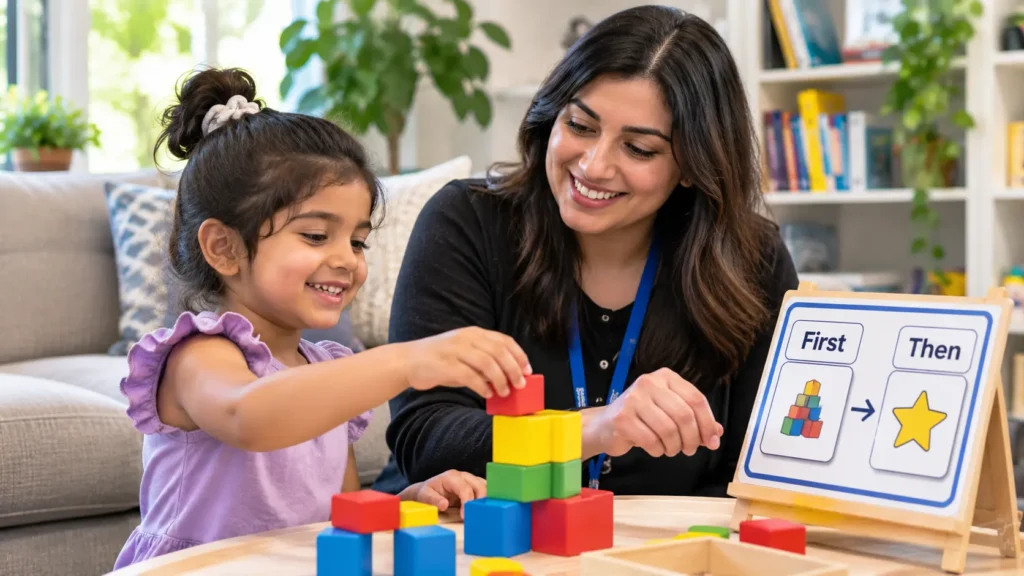
Example: A therapist might use building blocks or bubbles to encourage communication and shared enjoyment without forcing unwanted social interaction.
3. Daily Living and Independence
Simple routines provide opportunities to develop useful skills.
Common goals may include:
- Washing hands with appropriate assistance.
- Participating in dressing routines.
- Using utensils during meals.
- Putting toys away after activities.
- Making simple everyday choices.
- Communicating bathroom-related needs.
Tasks should be adapted to the toddler’s developmental abilities, sensory needs, and comfort.
4. Emotional Regulation and Transitions
Some toddlers experience difficulty when activities change or environments become overwhelming.
Supportive strategies may include:
- Using visual schedules for daily routines.
- Providing warnings before transitions.
- Offering choices between activities.
- Creating calm spaces when needed.
- Teaching ways to request breaks.
- Recognizing signs of sensory overload or distress.
The goal is to understand the child’s needs and provide appropriate support, rather than simply suppressing expressions of discomfort.
What Happens During ABA Therapy Sessions for Toddlers?
Toddler ABA sessions should be adapted to the child’s interests, developmental needs, and attention span.
Step 1: Developmental Assessment
A professional gathers information about:
- Communication and language development.
- Play and social participation.
- Strengths and preferred activities.
- Everyday routines and challenges.
- Parent concerns and priorities.
Step 2: Individualized Therapy Planning
The provider develops goals based on assessment findings and family input.
The plan may include:
- Specific functional communication goals.
- Appropriate play-based learning activities.
- Daily independence skills.
- Parent participation strategies.
- Methods for monitoring progress.
Step 3: Play-Based Learning
Toddlers may participate in activities such as:
- Building blocks and stacking toys.
- Matching and sorting games.
- Looking at picture books.
- Pretend play and sensory activities.
- Music, movement, and outdoor play.
- Practising skills during everyday routines.
Learning should remain enjoyable, flexible, and responsive to the toddler’s communication and comfort.
Step 4: Progress Monitoring
Professionals may review:
- Changes in functional communication.
- Participation in everyday activities.
- Progress toward individualized goals.
- Parent observations and feedback.
- Whether current strategies remain appropriate.
Therapy plans should be adjusted when needed, particularly if activities cause persistent distress or fail to support meaningful goals.
ABA Therapy at Home vs. Daycare in Toronto
Families may explore home-based or daycare-based therapy depending on their child’s needs and available services.
Home-Based ABA Therapy
Potential advantages include:
- Learning in a familiar environment.
- Practising skills during family routines.
- Opportunities for caregiver participation.
- Individualized activities using familiar toys.
- Support with communication and daily independence.
Daycare-Based ABA Therapy
Potential advantages include:
- Practising communication during childcare activities.
- Supporting participation in group routines.
- Developing functional skills in a natural setting.
- Opportunities for collaboration with daycare educators.
- Helping toddlers navigate transitions and shared activities.
Parents can learn more about ABA therapy at daycare in Toronto.
Which option is better? Neither setting is automatically best. The decision should consider the child’s developmental needs, comfort, childcare arrangements, and individualized recommendations.
How Can Parents Support Their Toddler at Home?
Parents can encourage development through simple, enjoyable daily interactions.
Practical Activities for Everyday Learning
- During breakfast: Offer choices between two foods to encourage communication.
- During playtime: Follow your toddler’s interests and create opportunities for shared enjoyment.
- During reading: Use picture books to explore objects, actions, and sounds.
- During dressing: Encourage participation in manageable steps without rushing.
- During outdoor play: Practise communication through preferred movement and games.
- During transitions: Use predictable routines and appropriate visual supports.
- During challenging moments: Recognize discomfort, offer reassurance, and support communication.
Parent coaching can help families choose strategies that fit their child’s developmental needs and everyday lifestyle.
Is ABA Therapy for Toddlers Covered in Ontario?
Ontario offers several autism support pathways through the Ontario Autism Program (OAP).
Depending on eligibility and program availability, families may access:
- Caregiver-mediated early years programs.
- Needs-based core clinical services.
- Foundational family services.
- Other program supports appropriate to their circumstances.
Ontario’s caregiver-mediated early years programs are designed for eligible children aged 12–48 months and emphasize child-led learning and caregiver participation.
Important: Program eligibility, available funding, and service coverage differ. Parents should review current requirements through the Government of Ontario before making financial decisions.
How to Choose an ABA Therapy Provider in Toronto
Selecting a suitable provider involves understanding the quality, approach, and flexibility of the services offered.
Questions Parents Should Ask
- What qualifications and professional registration do the supervising clinicians hold?
- How are therapy goals developed for toddlers?
- Does the program use play-based, child-centred activities?
- How are children’s communication preferences respected?
- What happens when a child refuses an activity or becomes distressed?
- How are parents involved in therapy planning?
- How frequently is progress reviewed?
- Can the program collaborate with daycare staff or other professionals?
- What are the fees, schedules, and funding requirements?
- How does the team determine suitable therapy intensity?
A trustworthy provider should welcome questions and explain how interventions support a child’s wellbeing, communication, and meaningful participation.
Taking the Next Step Toward Early Support
Exploring ABA therapy for toddlers in Toronto is about understanding your child’s strengths, developmental needs, and available options.
When considering professional support, parents should prioritize:
- Individualized developmental goals.
- Respectful and child-centred therapy.
- Clear communication with professionals.
- Meaningful family involvement.
- Comfortable, developmentally appropriate learning.
- Regular reviews of progress and wellbeing.
Looking for early intervention support in Toronto?
ABA Therapy Toronto provides services for families exploring individualized early intervention and daycare-based ABA support. Visit ABA Therapy Toronto to learn more about the available options.
Frequently Asked Questions
1. At what age can toddlers start ABA therapy?
- Some early intervention programs work with children during their toddler years.
- Eligibility depends on the provider, individual needs, and program requirements.
- Developmental concerns should be discussed with a qualified healthcare professional.
2. Does my toddler need an autism diagnosis before starting ABA therapy?
- Some services and funding programs require a formal autism diagnosis.
- Other developmental supports may be available while families await assessment.
- A healthcare professional can recommend suitable next steps.
3. How many hours of ABA therapy does a toddler need?
- There is no universal therapy schedule suitable for every toddler.
- Recommendations should reflect assessment results, wellbeing, and family circumstances.
- Parents should discuss treatment intensity and alternatives with qualified professionals.
4. Can ABA therapy help toddlers with delayed speech?
- ABA approaches may support functional communication.
- Goals can involve gestures, pictures, words, or communication devices.
- Speech-language assessment may also help identify appropriate supports.
5. Can my toddler receive ABA therapy at daycare?
- Daycare-based ABA support may be an option where services are available.
- Therapy activities can address communication, play, and participation.
- Coordination with childcare providers and appropriate consent are important.
6. Is ABA therapy suitable for every autistic toddler?
- Not necessarily. Every child has different strengths, needs, and preferences.
- Families may consider ABA, speech-language therapy, occupational therapy, or other services.
- Support decisions should be individualized and involve qualified professionals.